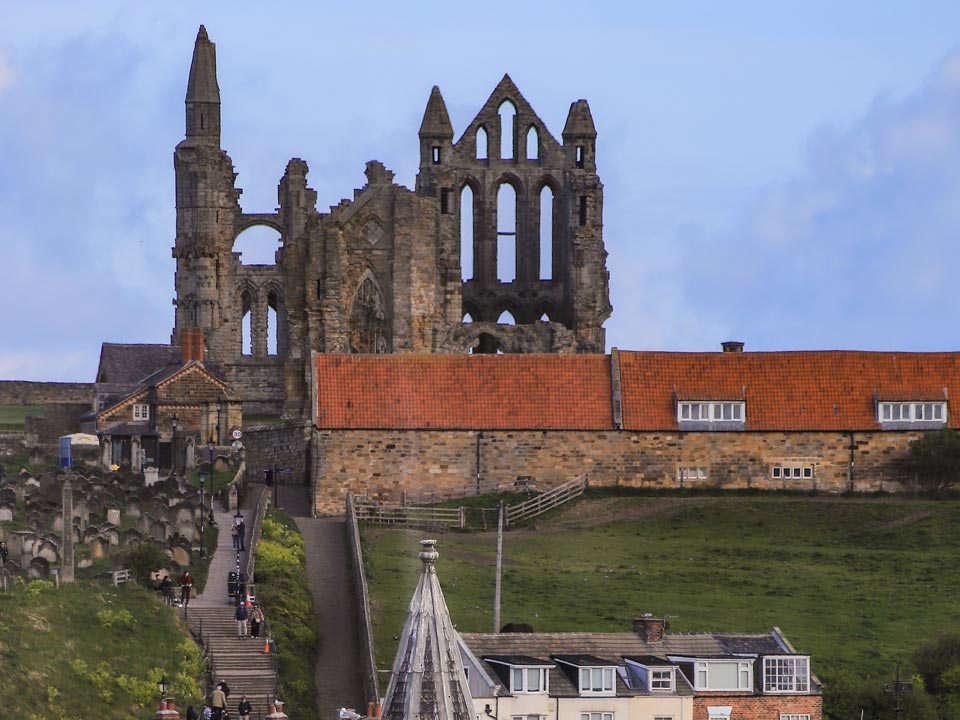
Perched dramatically on the East Cliff overlooking the North Sea, Whitby Abbey is one of England’s most striking historic ruins. With nearly 1,400 years of history, the abbey has played a central role in religion, literature, and local identity, shaping Whitby into the town visitors know and love today.
The Early Origins: A Sacred Beginning
Whitby Abbey’s story begins in 657 AD, when it was founded by King Oswiu of Northumbria following a decisive victory in battle. Originally known as Streoneshalh, the abbey was established as a Christian monastery and quickly became one of the most important religious centres in Anglo-Saxon England.
The abbey’s first abbess, St Hilda of Whitby, was a formidable and respected leader. Under her guidance, the monastery became a place of learning, scholarship, and spiritual influence, welcoming both monks and nuns in a rare double monastery arrangement.
The Synod of Whitby: A Turning Point in English Christianity
Perhaps the most significant event in the abbey’s early history was the Synod of Whitby in 664 AD. This landmark meeting brought together church leaders to decide whether the English Church should follow Celtic or Roman Christian traditions.
The decision to align with Roman practices shaped the future of Christianity in England and firmly placed Whitby Abbey at the heart of national religious history.
Destruction and Rebirth
The original abbey met a violent end in the 9th century, when Viking raiders attacked and destroyed much of the monastery during their coastal incursions. For centuries, the site lay in ruins.
Whitby Abbey rose again in the 13th century, rebuilt as a grand Benedictine abbey after the Norman Conquest. This new structure was vast, imposing, and designed to reflect both spiritual devotion and architectural power. The ruins you see today largely date from this medieval rebuilding.
The Dissolution of the Monasteries
The abbey’s fortunes changed forever in 1539, during Henry VIII’s Dissolution of the Monasteries. Like many religious houses across England, Whitby Abbey was closed, stripped of its wealth, and abandoned.
Left roofless and exposed to the elements, the abbey slowly fell into decay. Yet its haunting silhouette against the sky ensured it was never forgotten.
Inspiration for Dracula and Gothic Culture
Whitby Abbey’s dramatic setting later inspired Bram Stoker, who visited Whitby in 1890. The abbey’s looming ruins played a key role in Dracula, helping to establish Whitby as a gothic icon.
Today, the abbey is closely associated with Whitby’s alternative culture, including the famous Whitby Goth Weekend, which draws visitors from around the world.
Whitby Abbey Today
Now cared for by English Heritage, Whitby Abbey is open to visitors year-round. Walk among the towering arches, explore the museum, and take in panoramic views of the harbour, town, and coastline below.
The 199 steps leading up to the abbey are an experience in themselves, offering breathtaking views and a real sense of the site’s historical importance.
Stay Near Whitby Abbey
If you’re planning to explore Whitby Abbey, staying nearby allows you to experience the area at a relaxed pace. One Abbey Court offers comfortable accommodation located within a 20-minute walk of Whitby Abbey, making it an ideal base for your visit.
From here, you can easily explore the abbey, wander the historic streets of Whitby, enjoy the harbour, and take in the town’s rich heritage — all without relying on a car.
A Living Piece of History
Whitby Abbey is more than a historic ruin; it’s a symbol of England’s religious transformation, literary legacy, and enduring coastal charm. Whether you’re drawn by history, architecture, or gothic legend, a visit to Whitby Abbey offers a powerful connection to the past.
Staying nearby at One Abbey Court allows you to fully immerse yourself in this unique setting, combining modern comfort with centuries of history just a short walk away.